A scar is not automatically ready for cosmetic treatment as soon as the wound closes. Timing depends on how the area is healing, whether the skin is fully intact, scar thickness, redness, symptoms and the treatment being considered. Some scars may benefit from monitoring or medical review before procedures such as needling, laser or other skin treatments are discussed.
Once a wound has closed, it can be tempting to start thinking about how the scar will eventually look.
A surgical incision may still be pink. A cut that required stitches might feel firm underneath. A biopsy site may look darker than the surrounding skin. You may wonder whether waiting will make treatment harder, or whether starting too soon could interfere with healing.
There is no single number of weeks that makes every scar “ready”.
The more useful question is whether the wound has healed appropriately, what the scar is doing now and what aspect of it you are hoping to address.
Skin closure is only one stage of healing.
After an injury or procedure, the body continues remodelling collagen and reorganising scar tissue for months. During this period, a scar can change in colour, firmness, thickness and texture.
It may initially appear red or pink. It can feel slightly raised or firm. Some scars gradually flatten and become less noticeable without an in-clinic procedure.
This ongoing change is known as scar maturation.
That is why assessing a newly closed wound as though it were a finished scar can be misleading. What you see early in healing may not represent its eventual appearance.
Before cosmetic scar treatment is considered, the skin generally needs to be intact and healing without signs of complication.
A practitioner will want to know whether there has been:
If you have recently had surgery, the instructions from your surgeon or treating healthcare professional take priority.
A cosmetic procedure should not replace appropriate postoperative wound care.
Persistent redness is one reason people start researching scar treatment relatively early.
But redness during healing can have several explanations.
A recently formed scar may naturally have increased vascular activity. Some scars remain pink or red for an extended period while they mature. In other cases, pigmentation or inflammation may contribute to the colour you notice.
Colour also tells us something different from texture.
A scar can be completely flat but very noticeable because it is red or darker than the surrounding skin. Another may be close to normal skin colour but feel raised, firm or indented.
The treatment discussion should therefore begin with what makes the scar noticeable, not simply the fact that it is visible.
Appearance is only part of scar assessment.
How the scar feels can provide useful information.
A scar might be:
Some of these characteristics are part of normal maturation. Others may warrant medical review, particularly when a scar becomes increasingly raised, painful, restrictive or continues growing beyond the boundaries of the original injury.
When patients seek scar treatment in Perth, the assessment therefore includes more than looking at colour from a photograph.
One concern raised frequently in patient discussions is whether treatments such as microneedling or laser could make a raised scar worse.
That concern deserves proper assessment rather than a blanket answer.
Some people are more prone to hypertrophic or keloid-type scarring. These scars behave differently from flat, discoloured or depressed scars and may require management outside the scope of routine cosmetic skin treatment.
If a scar is becoming progressively thicker, growing beyond the original wound, painful or particularly symptomatic, it may be appropriate to seek medical or specialist assessment before considering cosmetic procedures.
The goal is not to find a procedure that can be performed on every scar. It is to determine which pathway is appropriate for the scar in front of you.
The way a scar develops can influence how it should be assessed.
Surgical Scars
A planned surgical incision is usually closed under controlled conditions, but healing still varies between patients and body areas.
Tension across the wound, location, infection, genetics and postoperative care can all influence the final scar.
Scars From Cuts or Accidents
Injury-related scars may be more irregular because the original wound was not created under surgical conditions.
Depth, contamination, tissue damage and the way the wound was repaired can all affect healing.
Biopsy or Minor Procedure Scars
Small procedures can still leave visible changes in colour or texture.
Because the area may be relatively small, patients sometimes focus heavily on the remaining mark once the original medical issue has resolved.
Acne Scars
Acne can leave indented or raised scars. Lingering red or dark marks do not always represent true scarring.
Acne scars need a separate assessment, and ongoing acne usually needs to be managed before treatment aimed at improving scar texture begins.
Each type can require a different discussion about timing and realistic expectations.
Some scars may benefit from early treatment under medical guidance, once the wound has healed sufficiently. Full scar maturation is not always required; timing depends on the scar, the proposed treatment and advice from your treating healthcare professional.
There is understandable anxiety that waiting might mean “missing the window” for treatment.
That is not a good reason to rush into a procedure while the tissue is still healing.
Some scar characteristics improve naturally during maturation. Treating too early may make it difficult to tell what would have settled without intervention.
There are also different types of scar care.
Advice regarding wound support, sun protection or silicone-based products is not the same as performing an in-clinic resurfacing or collagen-remodelling procedure.
An early assessment can help clarify whether to begin scar care, consider treatment or allow more time for natural healing.
At the other extreme, some people assume that nothing can be done once a scar is old.
Scar age is only one consideration.
An older scar may still have characteristics that can be assessed, including uneven pigmentation, texture differences, depression or persistent redness.
The relevant question becomes whether the treatment available is suitable for that particular feature and what degree of change may reasonably be expected.
A scar that has been present for years is not automatically untreatable, just as a newer scar is not automatically ready for treatment.
Skin does not behave identically across the body.
A scar on the face exists in different tissue from one across the chest, shoulder, abdomen or knee.
Movement and tension also vary considerably by location. A scar crossing a joint may have functional implications that a small facial scar does not.
Certain body areas are also more prone to raised scarring.
For these reasons, “How old is the scar?” is rarely enough information to determine whether a treatment is appropriate.
The practitioner also needs to understand where it is, how it heals and whether it causes symptoms.
Newer scars can be particularly noticeable when their colour contrasts with surrounding skin.
UV exposure may contribute to persistent pigment changes, which is why sun protection is commonly important during scar maturation.
This is especially relevant in Western Australia, where incidental sun exposure can be substantial even outside deliberate time spent outdoors.
Protecting a healing scar does not guarantee that it will become invisible, but it can be an important part of reducing avoidable colour change while the area matures.
“Make the scar disappear” sounds straightforward, but complete scar removal is generally not a realistic treatment goal.
Instead, identify the feature that bothers you.
Is it:
Different features may require different approaches.
A patient considering scar treatment at Fremantle because of persistent pigmentation may need a different discussion from someone concerned about surface irregularity or a raised scar.
Being precise about the concern helps avoid judging a treatment by an outcome it was never intended to produce.
Once a scar is appropriately healed and its characteristics have been assessed, skin needling may be considered for selected textural concerns.
The procedure creates controlled micro-injuries that initiate a wound-healing response involving collagen remodelling.
That does not make it suitable for every scar.
A flat textural scar, a raised scar and a scar with significant pigmentation are different starting points. Your scarring history and the way the original wound healed also matter.
COCO’s skin needling treatments can be discussed when the characteristics of the scar and your skin make this pathway appropriate.
“Laser for scars” can sound like one category, but laser and light technologies are not interchangeable.
Depending on the technology, some approaches may be considered for aspects of colour, redness or texture. The appropriate option depends on the scar and the surrounding skin.
This is especially important when pigmentation risk is present.
The laser and light treatment options available at COCO are therefore selected according to the concern rather than applying one standard scar protocol.
If the scar followed surgery or a significant injury, a little background information can make the assessment more useful.
Where available, it may help to know:
You do not need to know the medical terminology.
A simple history of what happened and how the area has behaved since is often enough to begin.
Not every scar belongs in a cosmetic skin clinic immediately.
Further medical assessment may be appropriate when a scar:
This is an important part of responsible scar management.
Knowing when not to proceed with a cosmetic procedure can be just as valuable as knowing which treatment might eventually be considered.
Changes in a scar can be gradual and difficult to notice from day to day.
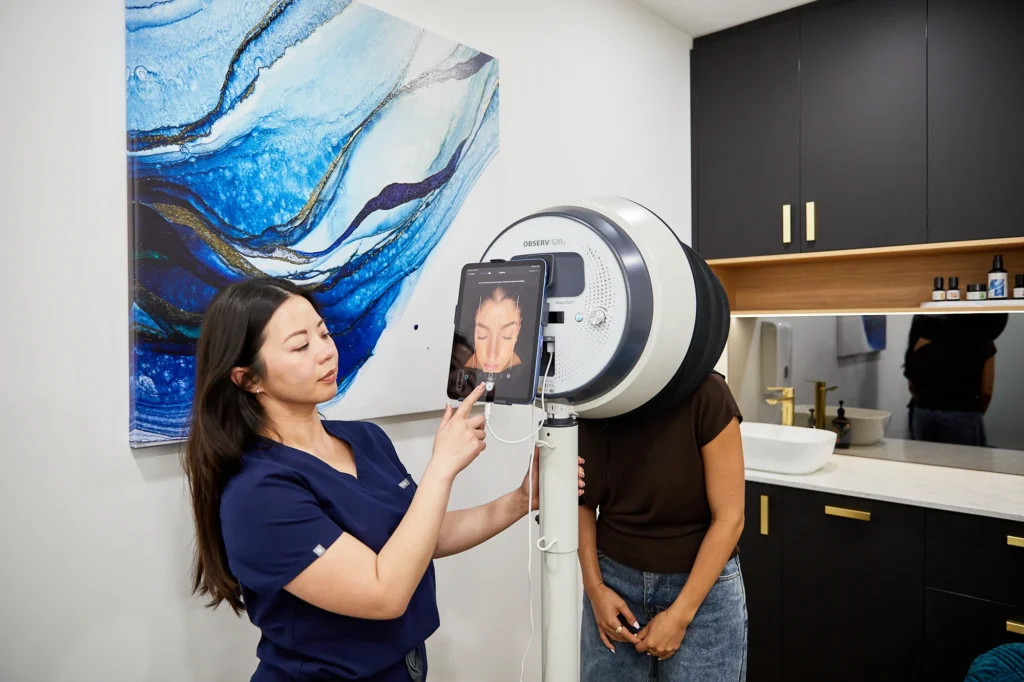
At COCO, clinical photographs and follow-up assessments can help track changes in a scar’s appearance over time. Photographs taken in consistent lighting and from the same angle make comparisons more useful.
During your review, we can also assess changes in texture, firmness and any symptoms you have noticed. These assessments help guide whether further treatment is appropriate or whether more time for natural healing would be beneficial.
Patients from Osborne Park, Doubleview and Scarborough can visit our Stirling skin clinic to discuss scars remaining after surgery, injuries or previous procedures once the initial healing phase has been appropriately managed.
Those travelling from Claremont, Cottesloe and Mosman Park can access assessment through our North Fremantle skin clinic.
At our skin clinic Perth & Fremantle, the aim is not to rush a healing scar into treatment. The first step is understanding where the scar is in its healing process, what features concern you and whether in-clinic treatment is appropriate at that stage.
There is no universal point at which every surgical or injury scar becomes ready for professional treatment.
A scar that is fully healed, stable and mainly affected by colour or texture presents very differently from one that remains raised, painful, changing or symptomatic.
If you are unsure, you do not need to choose between “treat it now” and “wait forever”.
An assessment can help clarify what stage the scar appears to be in, whether more natural maturation may be useful and which options, if any, could reasonably be considered later.
Disclaimer: This article provides general educational information about scar healing and cosmetic scar treatment following surgery or injury. It does not replace postoperative instructions, wound care or personalised medical advice. Scar healing, treatment suitability and potential risks vary between individuals. Seek assessment from an appropriately qualified healthcare professional if a scar is painful, changing, raised, restricting movement or not healing as expected.
Our friendly team is ready to help you feel confident and informed.
Cart
Refer a friend
Refer to T&Cs – Clause 91