
Facial volume loss and other changes associated with facial ageing involve more than the surface of the skin. Bone, muscles, ligaments, connective tissue and distinct areas of facial fat work together to influence facial shape, movement and proportions.
These supporting structures can change over time. Some areas may appear flatter or less defined, while others may begin to look heavier. Facial volume changes are often noticed around the cheeks, temples, under-eye area, mouth and lower face. Differences between the two sides of the face may also become more noticeable.
Visible facial volume loss, a tired appearance or a change in facial proportions does not necessarily have one cause. Skin quality, muscle activity, changes in facial fat and underlying structural support may all contribute.
For many people, the concern is not simply whether their appearance may change. It is whether they will continue to look familiar and recognisable to themselves.
What feels familiar is personal. It may involve the shape of your smile, movement around your eyes, the character of your profile or small natural asymmetries that have always been part of your appearance.
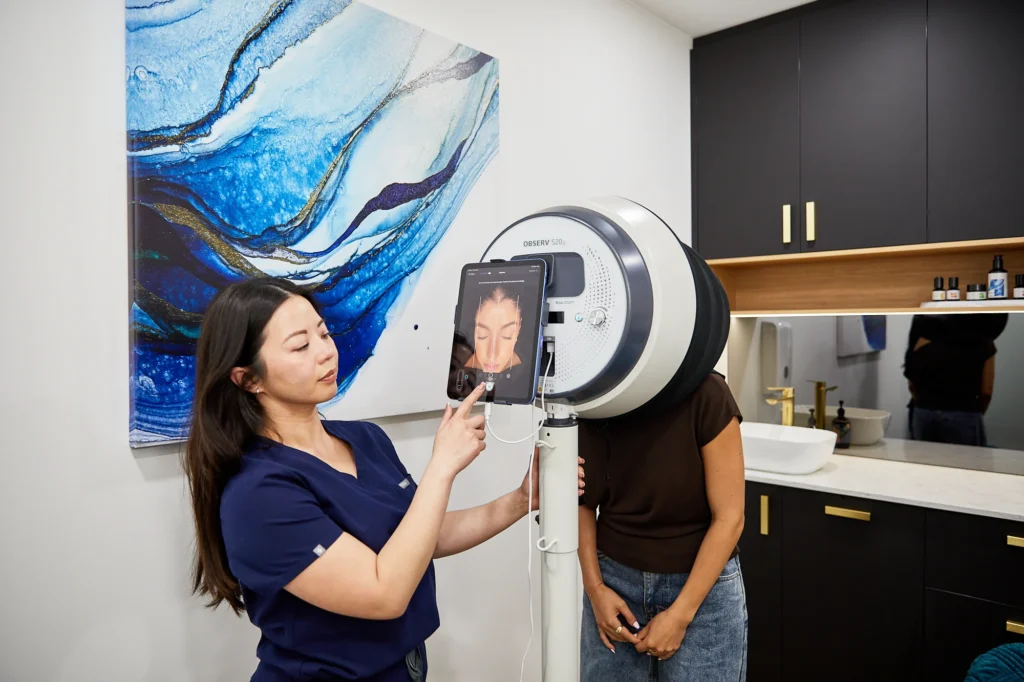
A consultation should begin by understanding these priorities and assessing whether a concern appears related to facial volume loss, skin quality, muscle activity, underlying structure or a combination of factors. It should also include a discussion of treatment and non-treatment options, potential risks, limitations and the fact that outcomes cannot be guaranteed.
People sometimes describe cosmetic treatment concerns in simple language:
“I do not want to look overdone.”
“I still want to recognise myself.”
“I want to look rested, not different.”
These statements are not superficial. They reflect the close relationship between appearance, expression and identity.
Your face is how others recognise you, but it is also how you recognise yourself. Even a technically well-executed change may feel wrong if it does not align with how you see your own features.
This is why consultation should explore more than the area you want assessed. Your practitioner needs to understand what you value about your face, what has changed and what you do not want to lose.
Some patients are comfortable with a noticeable change. Others prefer a very gradual approach. Some decide that understanding the concern is enough and choose not to proceed.
Each of these outcomes can be reasonable.
There is no single facial shape that suits everyone.
Cheeks, lips, temples, chins and jawlines vary naturally. The relationship between these features is influenced by genetics, bone structure, facial fat, muscle activity, skin quality and age-related change.
A treatment plan that looks balanced on one person may feel completely out of place on another.
This is one reason COCO approaches personalised facial volume loss in Perth and Fremantle through assessment rather than a standard treatment formula.
The aim of consultation is not to fit your face into a trend. It is to understand how your features work together and whether any proposed change respects your natural proportions.
Recognition is influenced by more than the size or shape of one feature.
Several elements contribute to how familiar your face feels:
Natural Proportions
The relationship between your cheeks, lips, chin, jaw and profile helps create your overall appearance. Changing one area can alter how nearby features are perceived.
Facial Movement
Your expressions shape how your face looks in conversation. A still photograph cannot fully show how you smile, speak, laugh or react.
Asymmetry
Most faces are naturally asymmetrical. One eyebrow may sit higher, one cheek may be slightly fuller or one side of the mouth may move differently. These differences are often part of what makes a face look real and familiar.
Skin Quality
Hydration, elasticity, pigmentation and texture influence how light falls across the face. A concern that appears to involve volume may partly relate to the skin itself.
Personal History
Your face reflects genetics, ageing, health, lifestyle and life experience. Some features carry personal or family significance that should not be treated as flaws by default.
A responsible assessment considers these elements together rather than focusing only on the feature that first caught your attention.
Facial features do not exist in isolation.
The cheeks influence the transition to the under-eye area. The chin affects the appearance of the jawline and profile. Lip proportions can change how the lower face is perceived. Temple contour can influence the shape of the upper face.
This does not mean several areas must be treated. It means that any recommendation should consider how one change may affect the wider facial balance.
A whole-face assessment is sometimes misunderstood as an attempt to recommend more treatment. It should instead be a way of understanding whether treating the requested area would make sense at all.
A careful practitioner may conclude that:
Looking at the whole face should support restraint, not undermine it.
“Natural-looking results” appears frequently in cosmetic content, but the phrase can mean different things to different people.
For one patient, it may mean that no one notices a specific change. For another, it may mean looking more rested while still seeing familiar lines and asymmetry. Someone else may be comfortable with a clearer difference, provided the face remains balanced.
A useful consultation should translate the word “natural” into specific preferences.
You might explain that:
These preferences help your practitioner understand the boundaries of an acceptable plan.
Online discussions about facial volume often focus on fears of looking “inflated”, “overfilled” or unlike oneself.
These concerns are usually not resolved by promising that treatment will be subtle. They are better addressed through careful planning, realistic limits and the willingness to recommend less.
Restraint may involve:
A practitioner who recommends less than expected is not necessarily being unhelpful. That recommendation may reflect a better understanding of facial proportions and long-term planning.
Patients often arrive knowing what they dislike but find it harder to describe what they want to keep.
Your practitioner may ask what has changed, but it can be equally useful to discuss what still feels right.
Consider the following before your appointment:
You do not need to have perfect answers. These questions simply help shift the consultation from “fixing” a feature to understanding your individual preferences.
Patients exploring doctor-led medical cosmetic care in Perth and Fremantle should be able to discuss these concerns openly before any decision is made.
Even a small change can initially feel unfamiliar.
Swelling, bruising, tenderness or temporary unevenness may affect how the face looks during early recovery. Patients may also notice a feature more intensely because they are checking it repeatedly or comparing it with photographs taken under different conditions.
Lighting, camera lenses, facial expression and angle can all change how facial proportions appear.
This does not mean every unfamiliar result should be dismissed as part of recovery. Your practitioner should explain what is expected, how long temporary effects may last and which changes require review.
Knowing what to expect can reduce unnecessary anxiety while also helping you recognise when to contact the clinic.
COCO provides further information about consultation, preparation and follow-up through its guide to what happens during your treatment journey.
A face that looks tired, less defined or different may not be experiencing volume change alone.
Skin texture, pigmentation, dehydration, collagen changes, facial movement and under-eye shadowing can all affect the way facial contours are perceived.
For example, an under-eye concern may relate to skin thickness, pigmentation, anatomy or lighting rather than volume. Changes around the mouth may be influenced by movement and skin quality as well as structure.
This is why self-diagnosing from photographs or social media examples can be misleading.
Patients concerned about movement-related lines can explore COCO’s consultation for lines and wrinkles in Perth and Fremantle, while those focused on facial fullness and proportions may require a different assessment.
The most visible concern is not always the underlying cause.
Before any treatment decision, you should understand what has been recommended and why.
The discussion may include:
You should also have the opportunity to ask what may happen if you decide not to proceed.
A consultation is not successful only when treatment occurs. It can also be successful when you leave with a clearer understanding and decide that no action is right for you.
Patients seeking cosmetic facial volume consultations in Perth and Fremantle often arrive with mixed feelings. They may be curious about what is possible while also feeling cautious about losing the features that make them recognisable.
COCO’s consultation-led approach gives patients time to understand the relationship between structure, volume, skin quality and natural expression. Recommendations are shaped around the individual rather than a standardised aesthetic.
The goal is not to erase every sign of change. It is to support informed decisions that respect your face as it is now.
Patients from Cottesloe, Claremont and Mosman Park may choose North Fremantle for consultations about facial shape, balance and age-related volume changes.
Those travelling from Doubleview, Osborne Park or Scarborough may find Stirling more convenient. Both clinics follow the same personalised approach, with time to discuss what you want to change and, just as importantly, what you want to preserve.
Patients can also learn more about the practitioners involved in their care through the COCO Skin Clinic team.
A facial volume assessment should not begin with the assumption that your face requires more volume.
It should begin with a conversation about what you have noticed, how you feel and what looking like yourself means to you.
You may decide that a small, staged approach feels appropriate. You may discover that the concern relates more to skin quality than volume. You may choose to wait or decide not to proceed.
The right plan is not the one that creates the most visible change. It is the one that respects your natural features, accounts for the face as a whole and gives you enough information to make a decision without pressure.
Disclaimer: This article provides general educational information about facial volume and cosmetic treatment planning. It does not replace personalised medical advice or determine whether a procedure is suitable for you. Medical and cosmetic procedures involve potential risks, and individual outcomes vary. Consult a qualified healthcare practitioner for assessment, informed consent and advice based on your circumstances.
Our friendly team is ready to help you feel confident and informed.
Cart
Refer a friend
Refer to T&Cs – Clause 91